Lymphatic drainage, anti-cellulite massage, maderotherapy and apparatus endermology look like variants of the same thing on a price list. They are sold in almost identical language: body shaping, detox, firming, cellulite reduction. As a result a lot of people book the one treatment that does not address their actual problem. In reality these are four different methods with different mechanisms, different pressure and different purposes.
This article compares them. And since this is the category with the most demand and the most nonsense attached, let us start at the uncomfortable end.
First, what none of them can do
Let us be specific, because vague language helps nobody here.
- These are not weight-loss treatments. No massage and no machine removes fat tissue. Weight is a question of energy balance, not of hands or wooden rollers.
- They do not permanently remove cellulite. Cellulite is the normal architecture of subcutaneous tissue in the overwhelming majority of women, driven by connective septa and hormones. It is not a disease, it is not a failure, and no treatment abolishes it for good. Improving how skin looks is achievable. Erasing it is not.
- "Minus four centimetres in one session" is almost always water. When you see a promise like that, assume the circumference was measured before and after retained fluid moved. It is a real number and it feels genuinely good. It also comes back within days if nothing else changed.
- There is no "detox". Flushing out toxins is a marketing phrase, not physiology. The lymphatic system moves interstitial fluid, proteins and metabolic waste; massage supports that flow, but nothing is being detoxified.
What these methods do instead, and why they are worth booking: they support blood circulation and lymph flow, temporarily reduce swelling, release tension in the subcutaneous tissue, improve the appearance and elasticity of skin, and for most people improve how their own body feels to them. That is a lot. It is simply not the same thing as losing weight.
Quick comparison
| Method | What it does | Best for | Pressure | Length | Sessions |
|---|---|---|---|---|---|
| Manual lymphatic drainage | slow rhythmic strokes towards the lymph nodes, supporting fluid return | swelling, heavy legs, recovery | very light | 80 min | relief immediately, 5 to 10 for chronic swelling |
| Anti-cellulite massage | intensive manual work on subcutaneous tissue, kneading and friction | tissue structure on thighs and buttocks | firm, often uncomfortable | 50 min | a series of 10, usually twice a week |
| Maderotherapy | the same work with anatomically shaped wooden tools, deeper and more even | hips, thighs, buttocks, skin tone | firm | 50 min | first visible change usually after 5 to 6 |
| Apparatus endermology (LPG) and Slim & Glow | mechanical stimulation by suction and rollers, evenly and repeatably | larger areas, skin tone, complement to manual work | medium, adjustable | 45 or 60 min | a series of 6 to 12 |
Manual lymphatic drainage
How it works, and why the pressure is so light
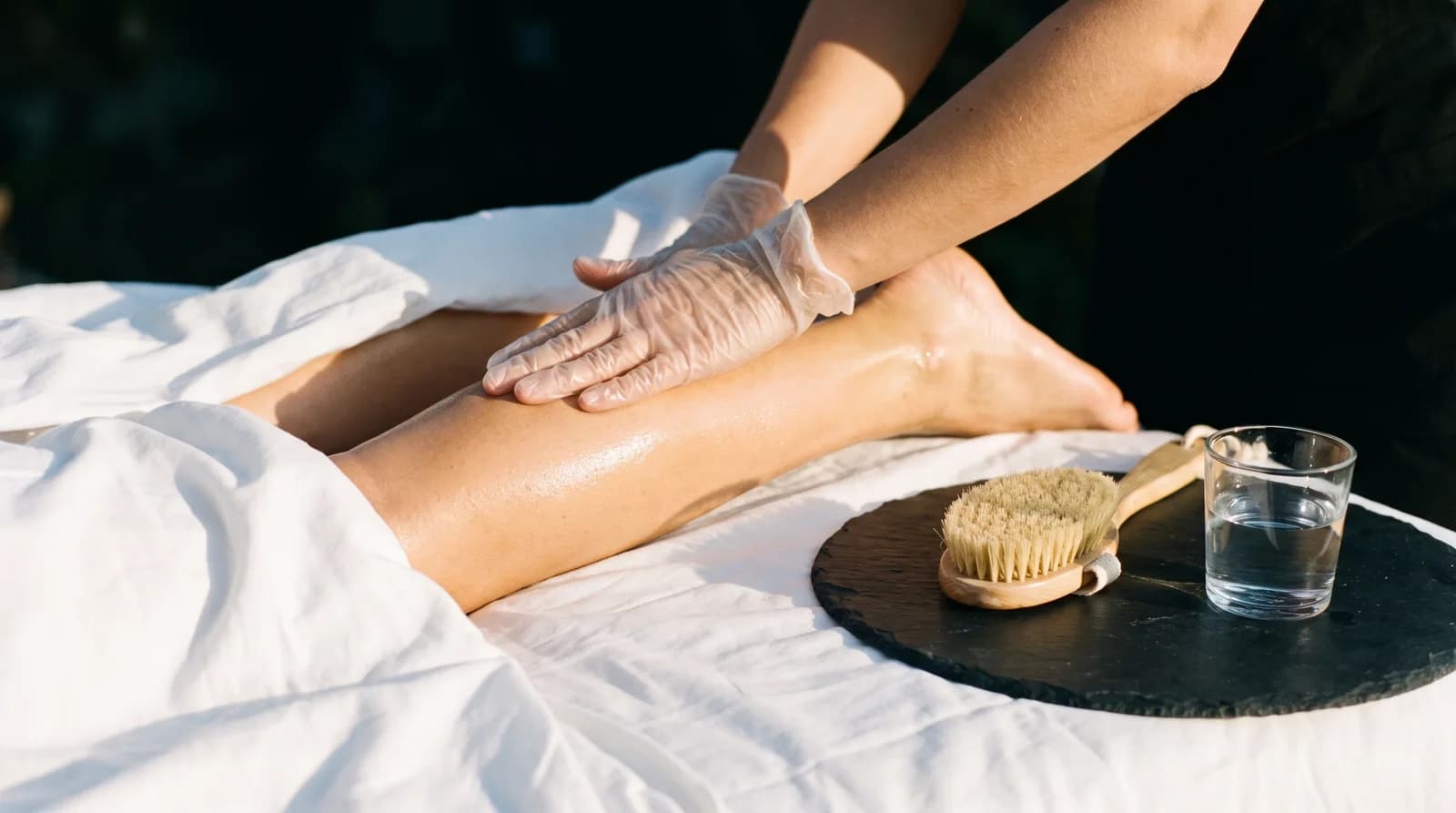
Lymphatic vessels sit immediately beneath the skin and have no pump of their own. Lymph moves through muscle contraction, breathing and tissue pressure. Lymphatic drainage imitates that: slow, rhythmic, repeated strokes towards the nodes, with pressure closer to stroking than to massage. Firmer pressure would simply collapse the vessels and cancel the effect. That is also why it runs 80 minutes; anything shorter cannot cover the system in the order it needs to be covered.
Most people are surprised by how uneventful it is. No kneading, no pain, no satisfying crunch. On the other hand, a lot of people fall asleep during it and need the bathroom unusually soon afterwards, which is normal and is actually good news.
Medical versus relaxation drainage
Here is a distinction almost nobody in Prague draws clearly. Medical lymphatic drainage for lymphoedema, typically after cancer surgery with lymph nodes removed, belongs with a trained physiotherapist, is delivered as part of complete decongestive therapy including compression, and is prescribed by a doctor. That indication is where the method has its strongest evidence base.
What we offer is manual relaxation lymphatic drainage: a cosmetic and recovery treatment for everyday swelling after a long day on your feet, after a flight, after sport, in hot weather or in late pregnancy. It works well for that, the effect is real, and it is temporary. We are not a medical facility and we do not treat lymphoedema.
When not to have it
- Suspected clot: one swollen, warm, red and painful limb. See a doctor immediately.
- Acute infection, fever, skin inflammation or cellulitis.
- Untreated heart failure or kidney insufficiency. Drainage increases the fluid volume returning to circulation.
- Active cancer without your treating doctor's approval.
Anti-cellulite massage
An anti-cellulite massage is the opposite of drainage. The work is deep, intensive, full of kneading and friction across subcutaneous tissue, and nobody has ever described it as pleasant. The aim is to bring blood into the area, mobilise the tissue and improve its elasticity.
Why it is uncomfortable, and why that is expected
It works a layer of tissue that is normally left alone, repeatedly and quickly. Small bruises on the thighs after the first sessions are not a sign that something went wrong, but they should not be routine either. If you consistently leave marked, say so and the pressure can be adjusted. A painful massage is not a more effective massage, only a more intense one.
Realistic expectations
After a series of ten sessions roughly twice weekly, most clients describe smoother, firmer skin and less tightness in the legs. Photographs from the first and last session usually show a difference, though a smaller one than Instagram promised. And if nothing changed in diet or movement meanwhile, the result drifts back over a few months.
Maderotherapy
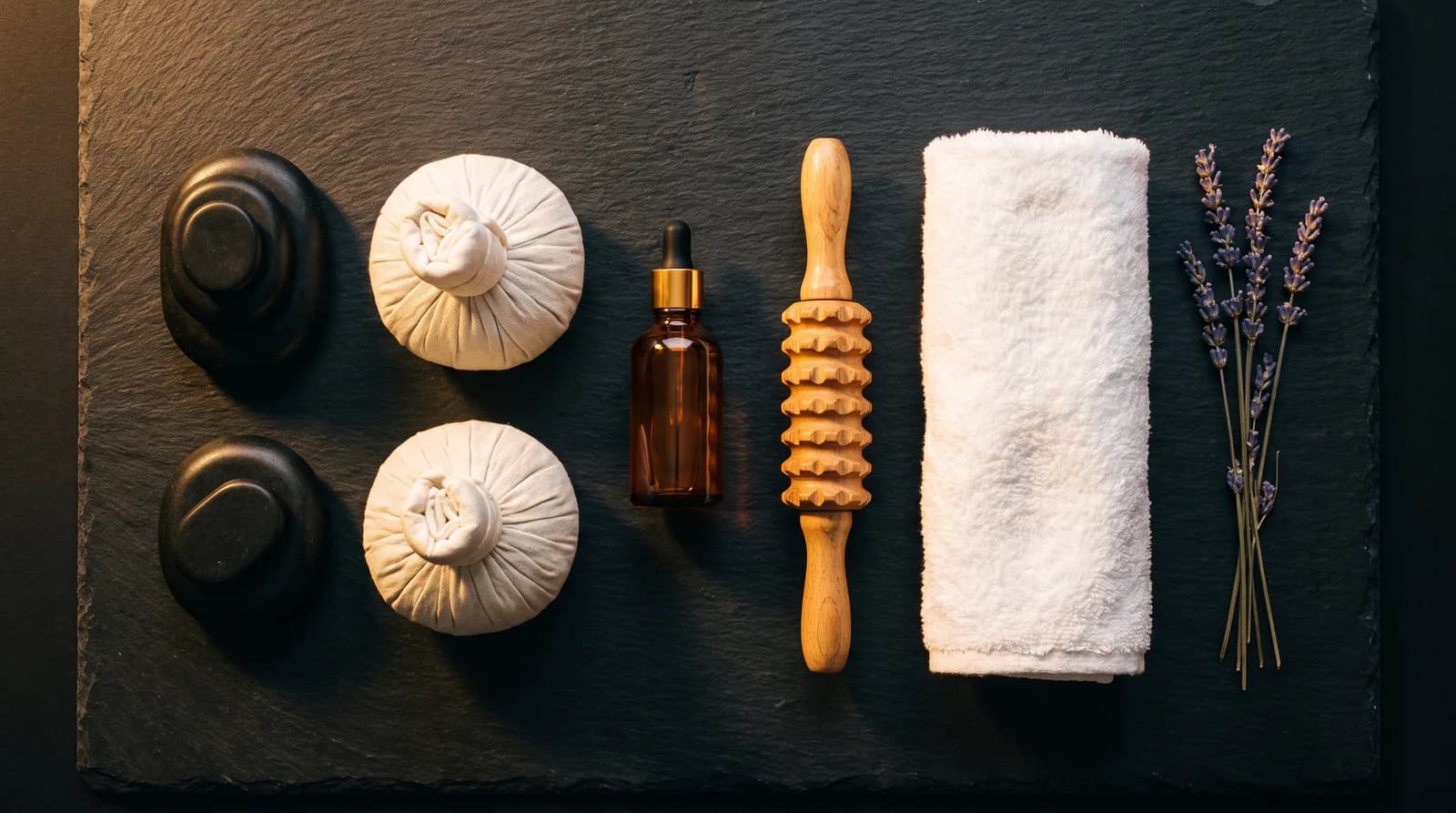
Maderotherapy is essentially anti-cellulite work performed with wooden tools: ridged rollers, cupped shapes for the buttocks, flat smooth blocks for the thighs. The tools originated in Colombia and their logic is practical. A therapist's hand tires and unconsciously varies pressure; wood does not. It holds the same intensity throughout and covers a large area more evenly than hands can.
It is often paired with manual lymphatic drainage: mobilise the tissue with the tools first, then support the outflow with light drainage. That combination makes sense, and it is why maderotherapy so often appears as part of a longer protocol rather than as a standalone half hour.
How many sessions before anything shows
The most commonly cited figure is five to six sessions before a visible change and a series of ten for a result worth photographing. That matches what we see. A single maderotherapy session is an experience, not an outcome. It is fairer to say so before you book than after.
Apparatus treatments: LPG endermology and Slim & Glow
Apparatus methods do in principle what hands do, only mechanically. A head with gentle suction lifts a fold of skin and rollers work it; pressure, speed and intensity are adjustable and, more importantly, repeatable in a way manual work never quite is. LPG endermology is the best known and longest established of them.
What can honestly be said about them: published results and everyday practice describe a temporary improvement in the appearance and elasticity of skin and a reduction in circumference, driven largely by fluid movement and tissue tone. This is not fat removal and it is not permanent. Against hands, a machine has two real advantages: it covers large areas without tiring, and it can be repeated precisely, so progress can be tracked. And one disadvantage: it has none of the sensitivity a therapist uses when a particular spot feels different.
In our salon that role belongs to Slim & Glow. The Classic version runs 45 minutes at 990 CZK and covers legs, hips, abdomen and buttocks. Full Body runs 60 minutes at 1,190 CZK and adds back and arms. Both are available as a package of five sessions with a sixth free. If your concern is specifically the abdomen and waist, there is also a targeted belly slimming massage in a 30-minute format.
Why it is done in series
Not in order to sell packages, but because of how tissue responds. A single session produces a short-lived change in circulation and drainage that fades within days. Changing the quality of subcutaneous tissue needs a repeated stimulus at sufficient frequency, usually twice a week for four to five weeks. Spread those same ten sessions across six months and each one will be pleasant while none of them adds up.
The most honest sentence we can offer about this whole category: the treatments account for maybe a third of the result. The rest is water, movement, sleep and how much salt is in your food. Come ten times and change nothing else and you get smoother skin and lighter legs. Come ten times while also walking and drinking, and you see a difference that stays.
The other half, which costs nothing
- Water. Swelling does not improve by drinking less. The opposite is true: dehydration makes the body hold on to more fluid.
- Salt. The fastest visible change available to you. Two days without cured meat, ready meals and salty snacks does more for swollen legs than one treatment.
- Walking. The calf muscle is the main pump for both lymphatic and venous return. Twenty brisk minutes a day beats anything we can do to you, as far as swelling is concerned.
- Legs up. Ten minutes with your legs above heart level in the evening.
- Sleep. Boring, but without it tissue does not recover and your hormones work against you.
Which one to choose
- My legs swell and feel heavy by evening: manual lymphatic drainage. Unambiguously, and nothing else first.
- I dislike the texture of the skin on my thighs and buttocks: anti-cellulite massage or maderotherapy, either one as a series. Maderotherapy covers more ground; hands are more responsive to specific spots.
- I want to work on my abdomen and waist: belly slimming massage, optionally combined with apparatus work.
- I want something systematic and measurable: an apparatus series, because it can be repeated identically and compared.
- I have a bit of everything and no idea: start with drainage. You will find out how much of what you see was fluid, and decide from there.
When to postpone all of it
Pregnancy and breastfeeding (drainage aside, by arrangement), acute infection and fever, skin disease or injury in the treated area, varicose veins in the area being worked, cancer without your doctor's approval, clotting disorders and blood-thinning medication, and the period soon after surgery. If you are unsure, tell us in advance. We will either adapt the treatment or recommend waiting.
Durations and current prices for all of these are on the price list. Book a session or a consultation online or on +420 774 505 613; we are at Na Bělidle 63/1 in Prague 5, open daily 10:00 to 20:00.
Frequently asked questions
Will I lose weight from lymphatic drainage?
The scale may drop by a few hundred grams up to a kilo as retained water leaves. No fat has gone anywhere and the number returns within two or three days.
Can I combine treatments?
Yes, and it often makes sense: intensive tissue work first, light drainage afterwards. What you should not do is stack two intensive treatments on the same area on the same day.
How many times a week?
For the intensive methods, usually twice a week for four to five weeks. Drainage can be more frequent when significant swelling is the reason for it.
Will it hurt?
Drainage will not; it is very light. Anti-cellulite massage and maderotherapy can be genuinely uncomfortable. Sharp pain is never appropriate though: say so and we will adjust.
How long do results last?
A single session, a few days. A full series, several months, but only if diet, movement and sleep do not deteriorate in the meantime.